Markets are becoming increasingly automated, and initiatives like Dhan Cloud are making it easier than ever for traders and developers to build, deploy, and scale trading systems without worrying about infrastructure.
But while execution is becoming more automated, risk management remains deeply human.
Traders still face challenges such as revenge trading, overtrading, oversized positions, FOMO-driven entries, and deviating from their own plans. The technology stack may have evolved, but the biggest source of risk often remains the decision-maker behind the screen.
That’s why TradLyt is building the AI Risk Co-Pilot for traders [tradlyt.com] —an intelligent layer that sits alongside every trading decision, helping traders identify behavioral risks, receive timely warnings before costly mistakes, and improve consistency over time.
Our vision is simple: as platforms like Dhan Cloud help traders automate execution, TradLyt helps them automate risk awareness—enabling smarter decisions, fewer avoidable losses, and better long-term performance.
@RahulDeshpande
Well its very easy to say this and have the context written by an AI(em dash, comma before the and etc). It would hold value if you explain how does tradlyt do it. Hence I request you to share a detailed explanation on how tradlyt does it and how is it different from the platforms that are there in the market?
@nitishbangera Fair point, and thanks for asking.
Most platforms today are very good at telling traders what happened — P&L, win rate, drawdown, risk-reward, trade analytics, etc. We are focused on understanding why it happened.
TradLyt analyzes a trader’s actual trading behavior to identify patterns such as revenge trading, overtrading, inconsistent position sizing, emotional scaling, early exits, and deviations from their own trading plan. Instead of only reporting metrics after the fact, our goal is to help traders understand the behavioral risks that are impacting performance.
For example, if a trader consistently increases position size after a loss, takes low-quality trades after a drawdown, or repeatedly exits winning positions too early, TradLyt attempts to detect these patterns and quantify their impact over time. We then provide personalized feedback and risk insights based on that trader’s own history rather than generic trading advice.
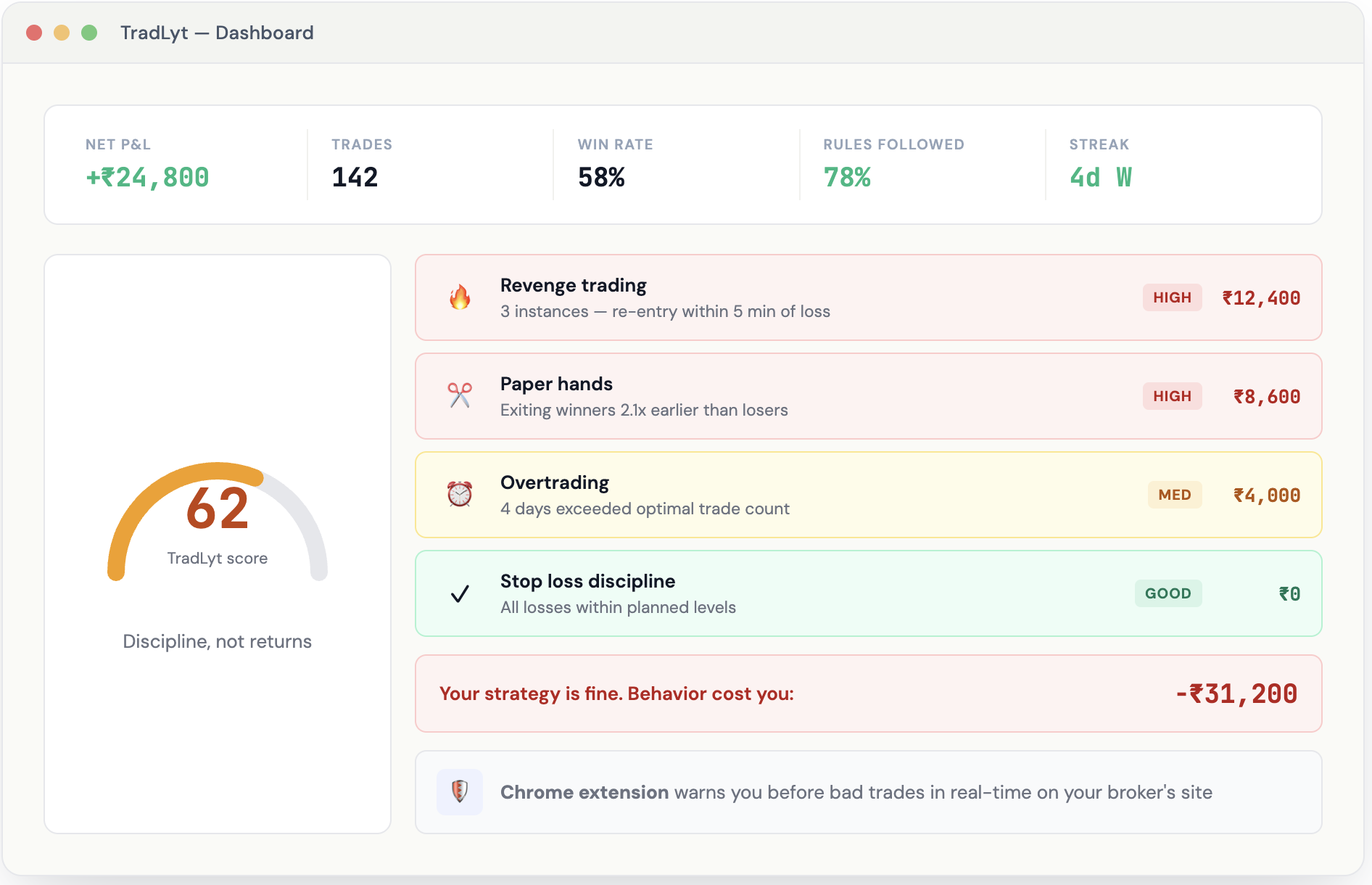
We have built our in-house risk analysis model called Rafiki (it’s an ML model) which provides the risk score based on traders’ past historical risk associated patterns. There are 10 risk associated patterns what we have quantified as cost such as Revenge trading, FOMO entry, over trading, inconsistent position size, paper hands etc.
Tradlyt also provides at real time risk analysis before you execute your order (your AI Risk Co-Pilot), how much risk is associated with that particular trade as shown here
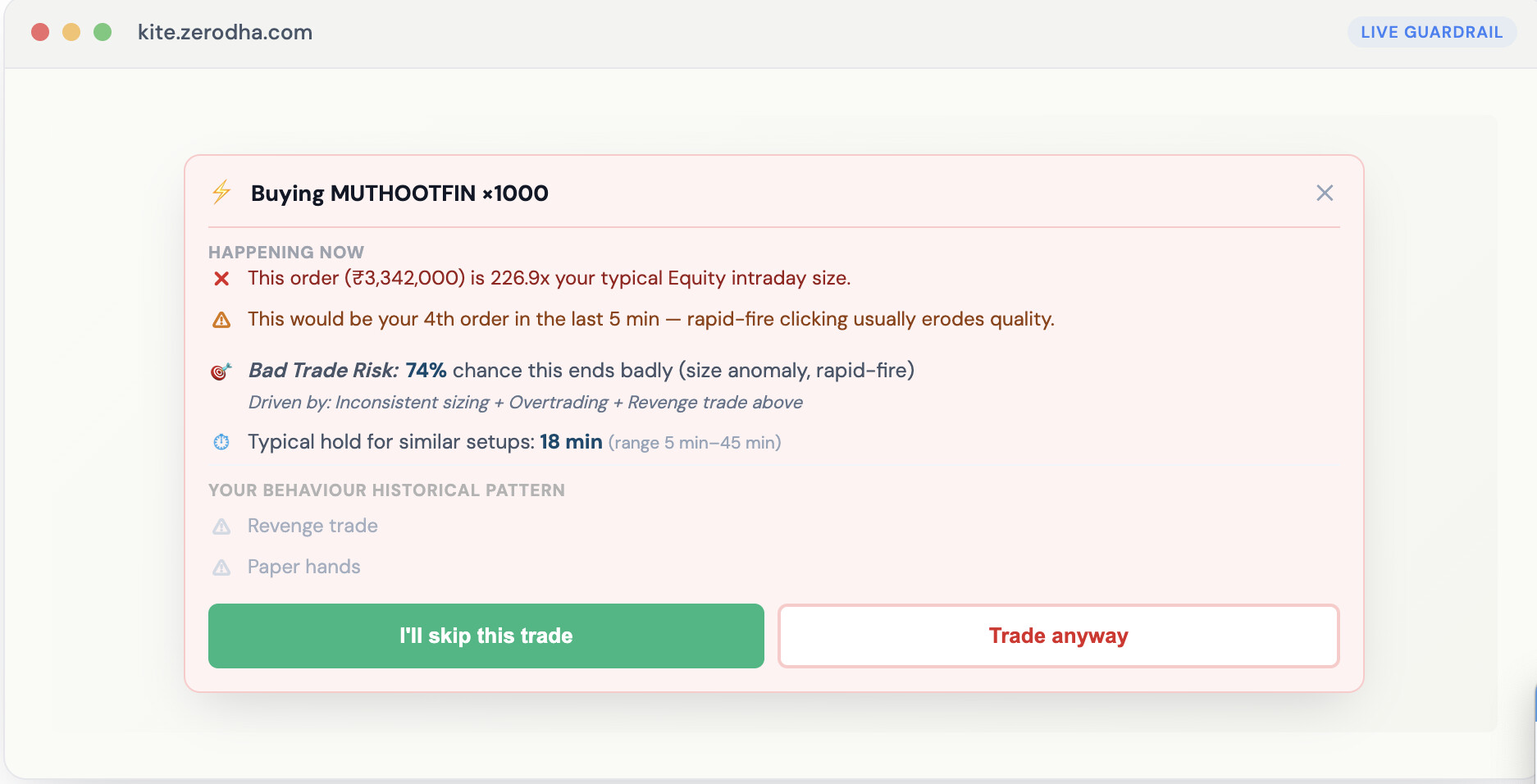 I would suggest you can try it yourself, we are looking for feedback and improvisation.
AI Risk co-pilot looks interesting but I feel all the variables are around sizing, overtrading and revenge trade. Does it work only for intraday or the copilot actually helps with swings.
How can you define the quality of trade? Also once you identify the patterns, do you give signals so that the trader adjusts the positions so that it becomes a better trade?