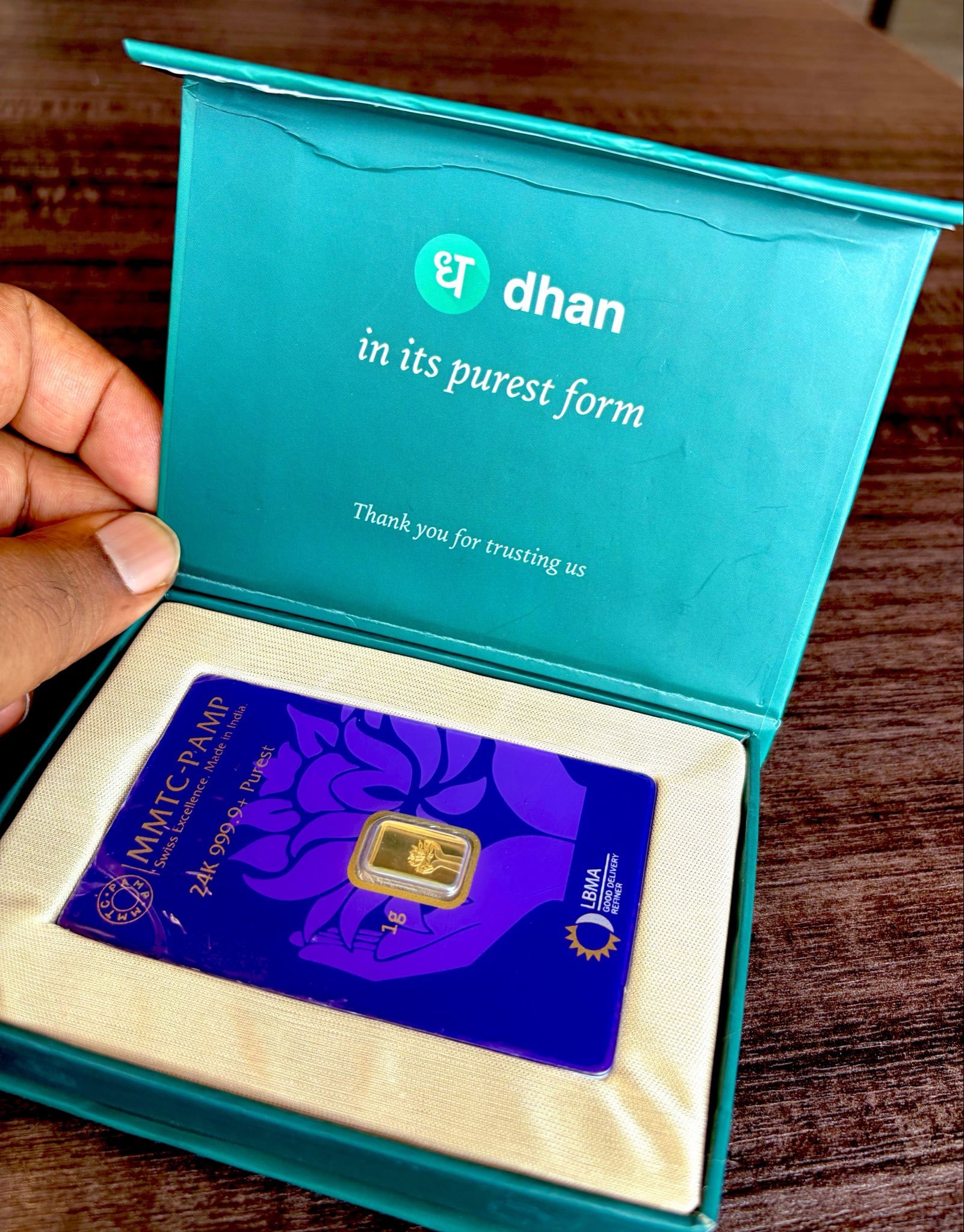
@PravinJ Great comparison. I completely agree that if the requirement is to buy a gold bar or a coin from a jeweller then Gold Vault or EGRs make complete sense because you get direct bullion rates and also the user saves on the locker rent if its stored in the vault. But if its only for investment then Gold ETFs are the way to go.
@PravinJ i am accumulating it slowly. Wanna know what will be the delivery charges?
I read it depends on location and quantity but still if I need 10gms inhyderabad. If I can get a little estimate. It will be easy for me to decide accumulating.
Hi @Rakesh_Roshan It will depend on the location of vault and your home. It will be delivered and insured as well, delivery will be handled by registered delivery partners only and not the local courier or delivery folks.
May be in range of 200 to 500 for most common & small denominations, we will try to publish these details - so please don’t hold this post of mine, it is a parter enrolled by exchanges + clearing corporation.
Hi @Cool2050 the vault charges are for 1 year, but I kind of assume people will take delivery in a year itself. Like I have started accumulating too, will get delivery in Diwali
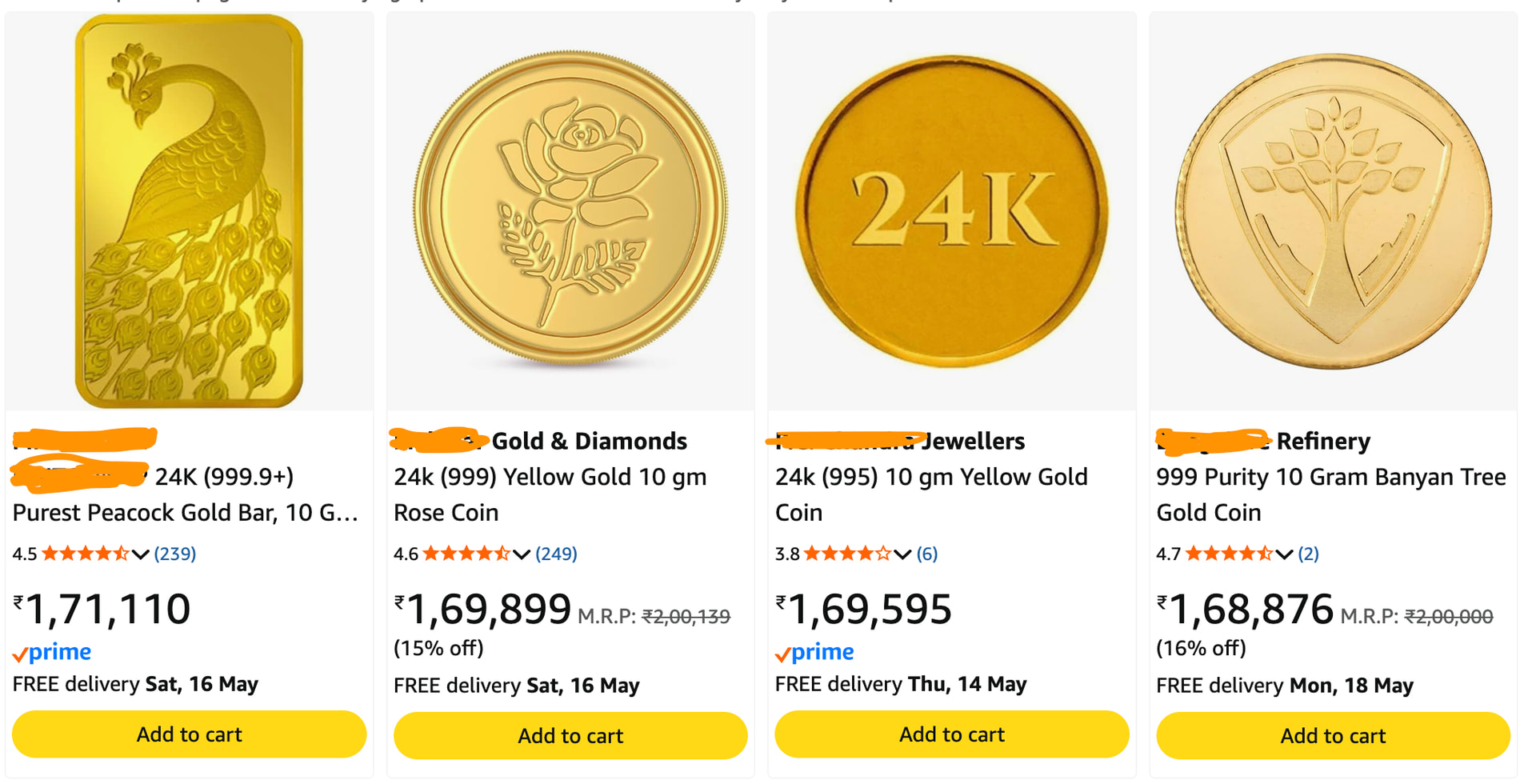
That ecommerce screenshot clearly shows how much extra money people end up paying outside. Bringing live MCX pricing with secure home delivery is a massive value addition for users. Great to see this level of honesty from Dhan!
Hi @Sonali_Chandra Some of the charges will get revised with scale is what we believe, please note Silver 100 is a new contract and attracted old price of vault, the same has been revised downwards by 80% by MCX and the benefit of same has been passed on to our users. Additionally, the home delivery is done by authorised delivery partners who do same via same vehicles / infra they do for institutions. GST and taxes are beyond our control, but where ever we can make a difference we try to do for our users.
@Sonali_Chandra I did a quick calculation on purchasing gold via Dhan vault or directly vs holding on to ETFs. Considering the holding period and the expense ratio for an ETF, paying an upfront 22.3% really doesn’t make sense. The capital gain on sell is the same but on physical gold, the period is 2 years for LTCG so liquidity quotient is towards ETFs as well. The only case is when we sell an ETF and buy physical gold which also I think would not match the upfront cost for atleast 20 years. Hence I am not sure what is best here.
The charges are not part of the acquisition cost. Its sunk cost and its similar to when you buy physical gold or silver. Buying physical gold is good if its jewellery. Keeping bars or coins really does not make sense. If the plan is to give it to make jewellery later on then we come down in purity and have additional GST too.
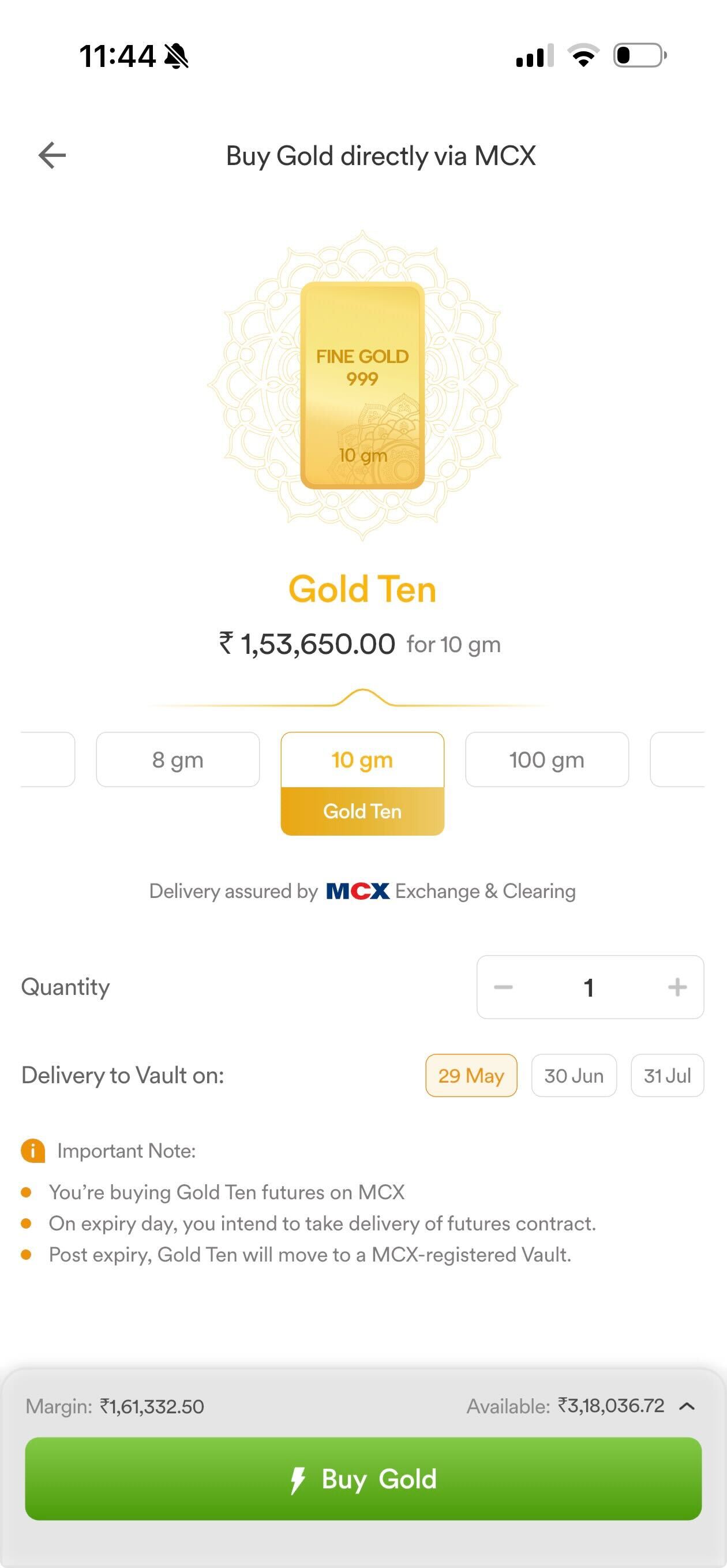
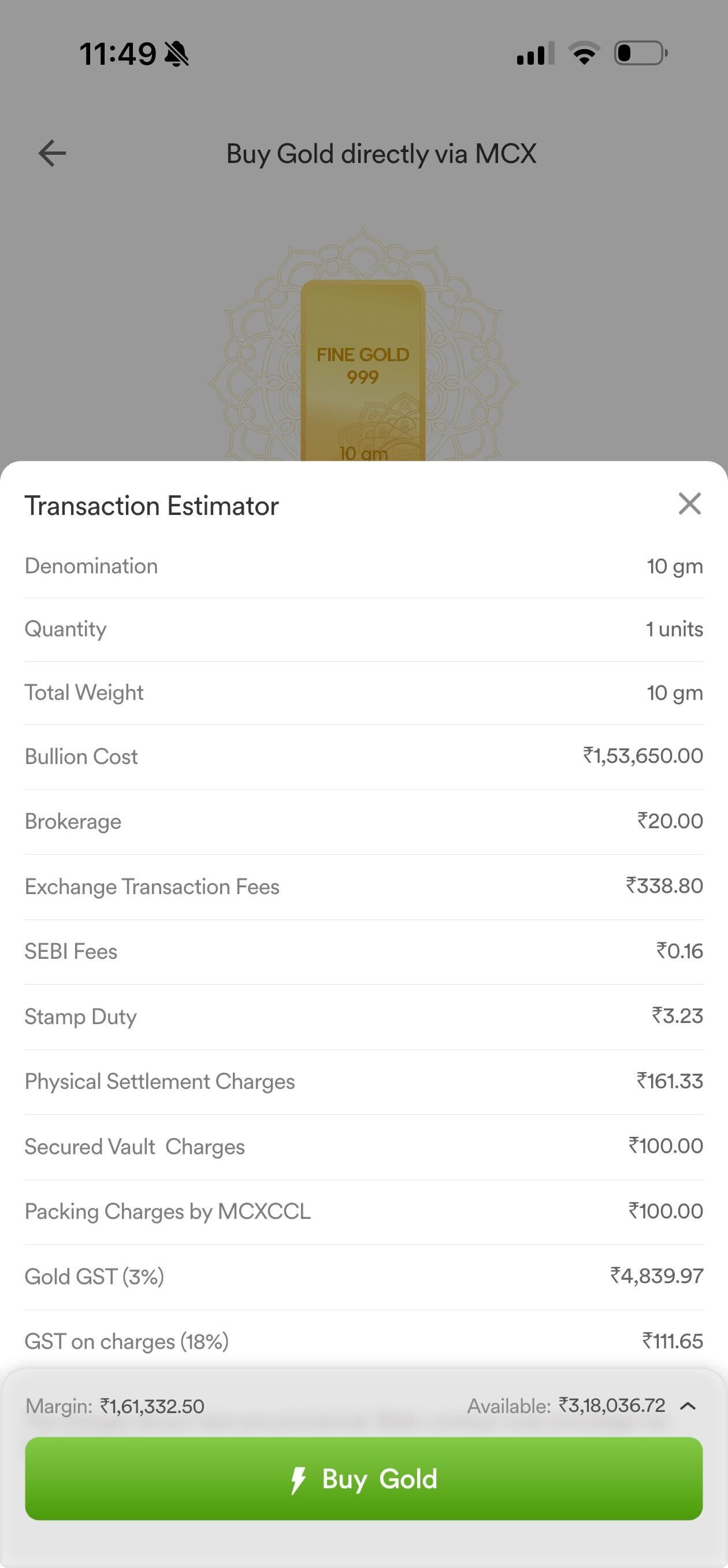


 Buy at Live Exchange Traded Price