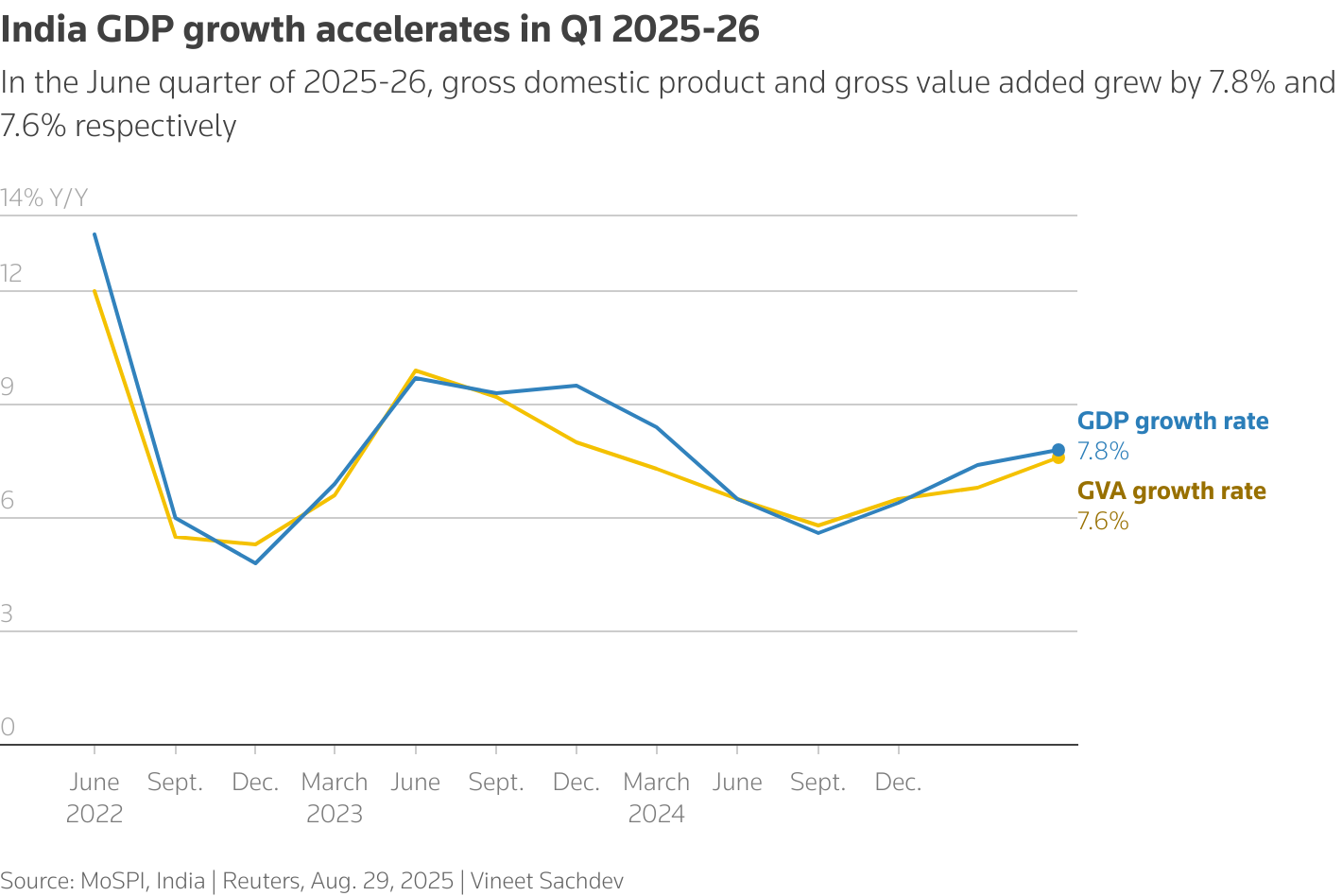
India’s economy outpaced expectations in the April–June quarter (Q1 FY26), with GDP expanding at 7.8% YoY — the fastest in five quarters. This resilience comes despite global headwinds and the looming threat of U.S. tariff hikes, which could pressure exports and corporate earnings in coming quarters.
 Key Economic Data (Q1 FY26: April–June)
| Indicator | Q1 FY26 | Previous Quarter | Trend/Notes |
|---|---|---|---|
| GDP Growth (YoY) | 7.8% | 7.4% | Fastest in 5 quarters; above 6.7% forecast |
| Gross Value Added (GVA) | 7.6% | 6.8% | Stronger underlying activity |
| Private Consumption | 7.0% | 6.0% | Boost from rural demand, tractors, durables |
| Govt Spending | +7.4% | -1.8% | Fiscal push adds support |
| Capital Expenditure | +7.8% | — | Some private hesitancy amid global uncertainty |
| Manufacturing Output | +7.7% | 4.8% | Strong rebound |
| Construction | +7.6% | 10.8% | Slight moderation |
| Agriculture | +3.7% | 5.4% | Weaker on base effect |
| Nominal GDP | 8.8% | Avg ~11% (last 8 qtrs) | Cooling inflation pressure |
| Rupee vs USD | Record low: ₹88.30 | — | Pressure from tariff-driven outflows |
| Equity Markets | 2nd month of losses | — | Growth strong, but sentiment cautious |
 The U.S. Tariff Overhang
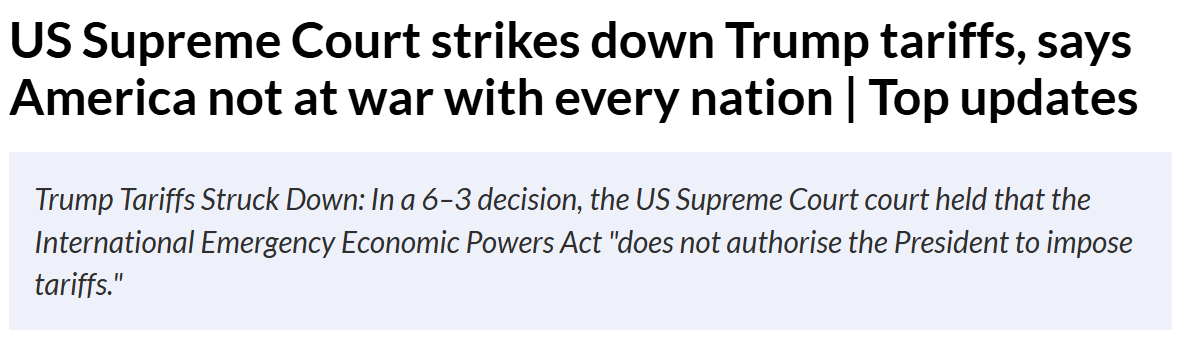
- U.S. doubled tariffs on Indian imports to as high as 50%, citing India’s Russian oil trade.
- Potential impact areas: textiles, leather goods, chemicals.
- Exporter groups estimate 55% of India’s $87B exports to U.S. could be affected.
- Competitors benefit: Vietnam, Bangladesh, and China may gain share.
- Economists warn 0.6–0.8% shaved off GDP growth if tariffs persist.
 Trader’s Perspective
-
Equity Markets: While real GDP is strong, slowing nominal GDP and tariff risks could weigh on corporate earnings → cautious sentiment ahead.
-
Rupee Watch: Fresh record low shows how quickly external shocks spill over. Exporters may gain in INR terms, but import-heavy sectors (oil, electronics) suffer.
-
Sector Moves:
- Positive: Domestic consumption plays (FMCG, tractors, durables), infra (govt spending support).
- Negative: Export-heavy sectors (textiles, chemicals, leather), rate-sensitive plays if RBI stays cautious.
-
Macro Setup: RBI steady at 5.50% repo rate; growth outlook still ~6.5% FY26, but risks tilted to the downside.
 Bottom line for traders: India remains the fastest-growing large economy, but U.S. tariffs are a genuine downside risk. Watch export-heavy stocks, rupee sensitivity, and consumption plays this festive season for cues.