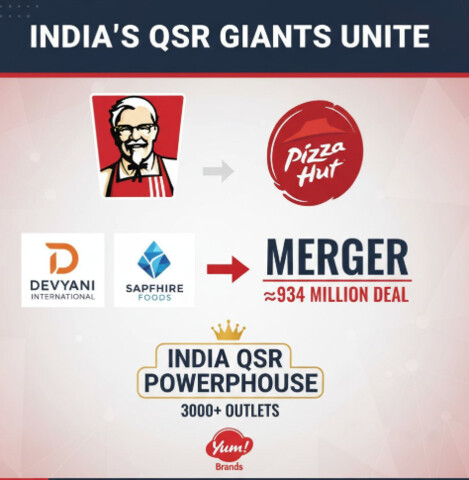
Two familiar names, Devyani International and Sapphire Foods, are joining forces in a share swap deal that could redefine how fast food is run in India. When the dust settles, KFC and Pizza Hut across the country will be housed under one listed giant, Devyani.
Why this is a big deal
Together, the platform will operate more than 3,000 restaurants across India and Sri Lanka, clocking consolidated revenue of about ₹7,800 crore. Media estimates value the transaction near USD 934 million, making this one of the largest consolidations the Indian QSR sector has seen.
The swap, simply explained
Sapphire Foods will merge into Devyani International. For every 100 Sapphire shares, shareholders receive 177 Devyani shares. Broker notes suggest pricing is near parity, so there is little arbitrage on the table. Once the scheme kicks in, Sapphire exits the market as a separate stock, and investors roll into Devyani.
What the timeline looks like
The proposed effective date is 1 April 2026, subject to regulatory and shareholder approvals. Management expects around 12 to 15 months to complete the merger process and another 15 to 18 months to fully integrate operations and extract synergies. A key positive is that Yum! Brands has already approved the consolidation of its India franchisees.
Behind-the-scenes moves
Ahead of the merger, Arctic International from the Devyani group will buy roughly 18.5 percent of Sapphire Foods from existing promoters, with the flexibility to later bring in a financial investor. Devyani will also acquire 19 KFC outlets in Hyderabad from Yum India and pay a one time fee of about ₹320 crore for merger approval and expanded territory rights.
So what changes on the ground
This merger unifies Yum’s two biggest India partners. Devyani gets nationwide franchise rights for KFC and Pizza Hut, plus a stronger foothold in Sri Lanka. Scale brings sharper bargaining power with vendors and landlords, a single supply chain and tech backbone, and better operating leverage across brands. Management and analysts point to steady state synergies of around ₹210 to ₹225 crore a year from the second full year of integration. Even in year one could see benefits of ₹100 to ₹150 crore.
What to keep an eye on
The combined entity becomes a serious multi-brand QSR heavyweight, better placed to compete with players like Jubilant FoodWorks. The opportunity is clear, but execution will be key. Integration complexity, delivery of promised synergies, regulatory timelines and franchise terms with Yum are the main swing factors.
Big scale, big ambition, and a long integration runway. This is one merger the QSR space will be watching closely  . Read more on scanX news.