Hi Everyone
Recently the NSE has come up with the circular dated 28/10/2022 for pre-trade risk controls. NSE has applied a new mechanism of Limit Price Protection (LPP) on Index Options. This is to make sure an effective risk management framework is in place and to achieve fair price discovery in the market.
What is Limit Price Protection?
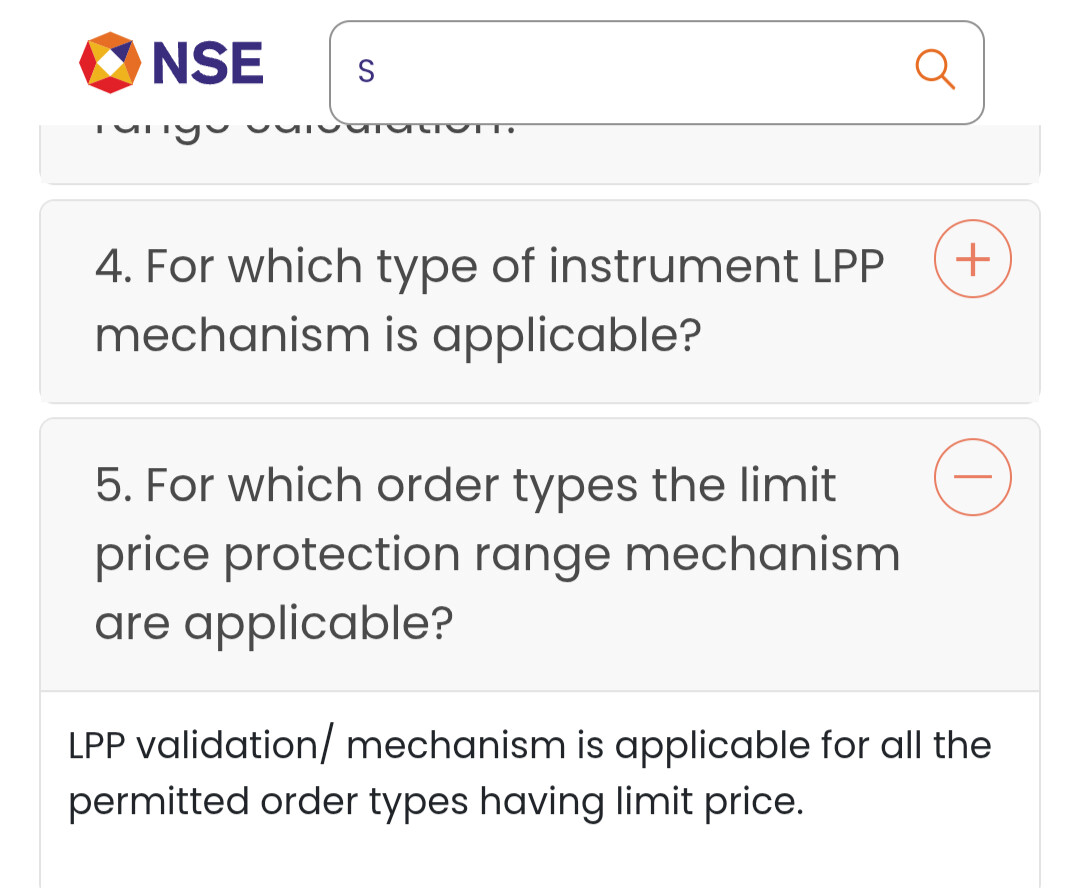
Limit Price Protection or LPP is the mechanism to define the price range for the Limit Orders if these order types are placed out of that range they will be rejected.
What LPP mechanism exchange has been applied in the latest circular?
The LPP range in the above-mentioned circular is applied only to the index options. The range is applied with respect to the Last Traded Price or reference price as defined in the circular.
- For Options Premium less than ₹50, the LPP range is ±₹20 from LTP/reference price (absolute ₹20, not percentage)
- For Options Premium more than ₹50, the LPP range is ±40% from LTP/reference price.
What happens if one places an order out of the LPP range?
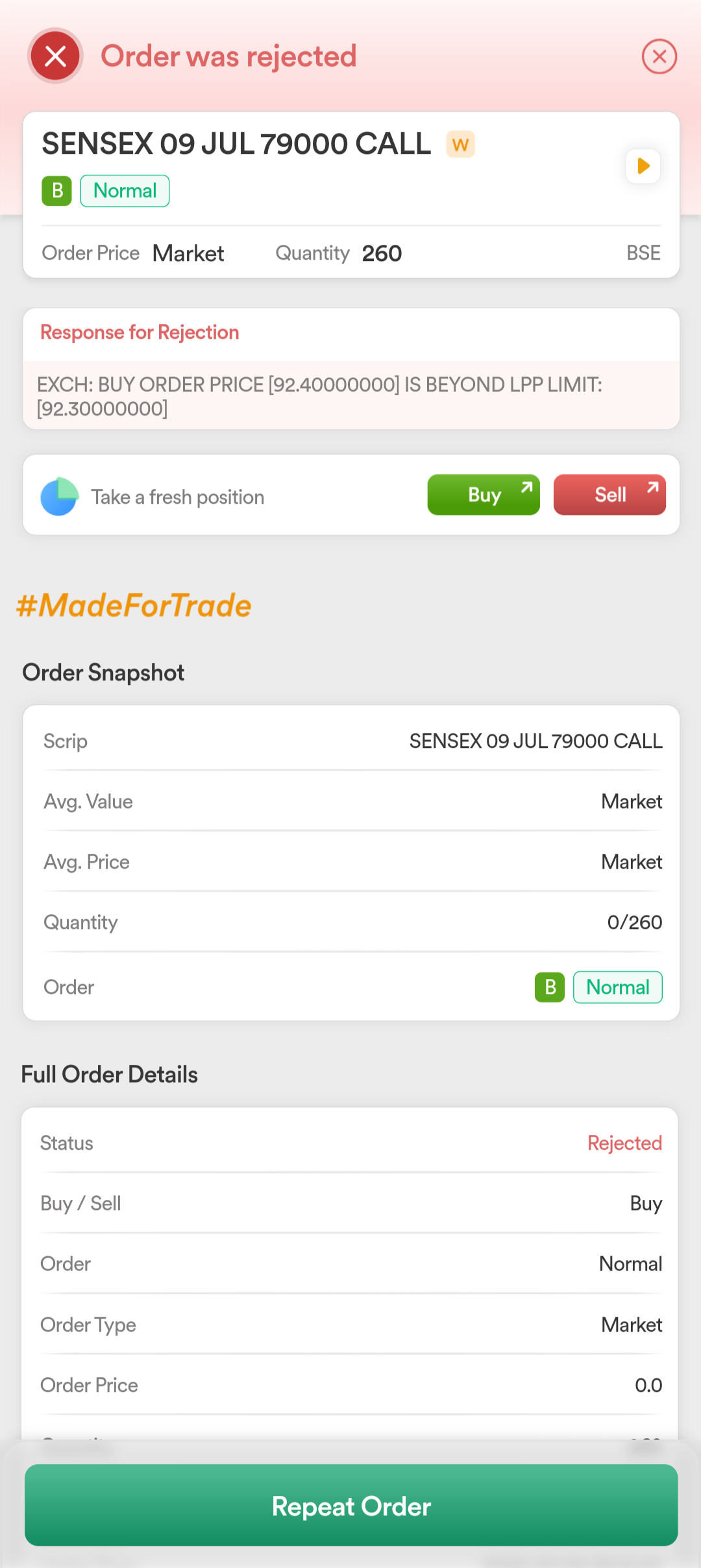
Any Limit Order placed beyond the LPP range shall automatically be rejected by the Exchange as per the following condition:
- Buy limit order price > High LPP limit
- Sell limit order price < Low LPP limit
The important point to note here is that the same LPP range is also applicable on the Stop Loss Limit order post-trigger. Hence, when SL-Limit is triggered and a limit order is placed, the same LPP checks will be applicable.
Lets review with some Examples:
Suppose the index option is trading at ₹100, since the premium is more than 50, the LPP range will be ±40% from the LTP i.e. upper limit of ₹140 and a lower limit of ₹60.
So if you place a buy limit order above ₹140, your order will be rejected, similarly, if you place a sell limit order below ₹60, your order will be rejected.
The same applies to the SL-Limit order, since the LPP check is applied post-trigger on SL-L, the system will allow you to place order out of LPP range, but will not execute post-trigger.
But you are open to place buy limit order below the lower limit of LPP and sell limit order above the upper limit.
Similarly, if the index option is trading at ₹30, since the premium is less than 50, the LPP range will be ±₹20 from the LTP i.e. upper limit of ₹50 and lower limit of ₹10.
And if the limit order and SL-limit (post trigger) are placed out of this range, it will be rejected.
Hope this clarifies Limit Price Protection and risk management around. With this, we are also working on Market Price Protection (MPP) for Options Trading, a detailed post on it later.
Till then Happy Trading on Dhan!
Best Regards
Kuldeep Mathur (Risk Team)