Borrowing through SLBM opens up trades that are not possible with normal delivery or futures. Most traders know the benefit of earning rental income by lending shares, but the borrowing side is just as powerful. It gives traders access to strategies that simply cannot be done in the regular cash market or through futures.
Here are the main reasons why borrowing is useful:
Short selling safely in the cash market
Borrow → Sell → Buy back cheaper → Return.
SLBM gives you real shares in your demat, no short-delivery penalties, and fully guaranteed settlement. This is the cleanest way to short a stock directly in the cash market.
Managing physical delivery in F&O
India’s F&O is physically settled. If a position goes ITM and you need to deliver shares, borrowing solves it instantly. Traders borrow shares, deliver them, and avoid auction losses or penalties.
Cash–futures arbitrage opportunities
When cash prices trade higher than futures and the spread beats borrowing cost, traders borrow shares, short them in cash, buy futures and capture the difference. SLBM allows perfect position sizing because you can borrow even 1 share.
Shorting stocks without futures or low-liquidity futures
Many stocks have no futures, and some have futures with poor liquidity. SLBM lets traders short these stocks directly, in any quantity they want, without relying on lot sizes. This also helps in event-driven trades where supply is limited.
More precise and controlled positions
Futures can be volatile due to rollover, premium/discount swings and expiry pressure. Borrowing shares helps traders avoid these distortions and size positions exactly based on their risk plan, even in small quantities.
From a Retail Investor’s point of view, are Retail Investors most likely to rent out a Stock thats runnning on notional loss or ones that are in profit?
Is SLBM suited for investors who hold stocks for Swing / Positional Traders ?
Say, If I decide to liquidate a stock that I have lend out; In an emergency situation, how long before I can recall to sell it and get the money to the bank? 1 day, 2 days, 3days ?
Let’s say an emergency occurs today at 11 AM. You can go to the Stocks on Rent section and place a recall order at market price. Your shares will be credited back to your demat account by tomorrow end of day. You can then place a sell order on Monday when the market opens and withdraw the funds on Tuesday morning.
So in total, it takes around T+3 working days to receive money in your bank account for stocks that are on rent.
@Mohseen_Usmani I have tested out renting out stocks using SLBM and earned about a couple of thousand rupees using SLBM renting. But I noticed that my stocks crashed badly after I rented them out using SLBM, which makes sense as short sellers probably sold the stock after borrowing it, resulting in stock price crash. Both the stocks I rented out were in-demand stocks in those weeks (even right now.. Amber is one of them).
I have been a derivative trader in the past and have taken too much risk in stock derivatives and lost a lot of money after initially making profits. I am mostly a post-COVID trader and investor. I normally deal in naked Futures contracts where position sizes are pretty big, especially with leverage, and so the profits and losses are also magnified. In addition, there is relatively higher volatility in stock futures compared to the actual stock, due to which Stoploss also get hit more often compared to the actual stock.
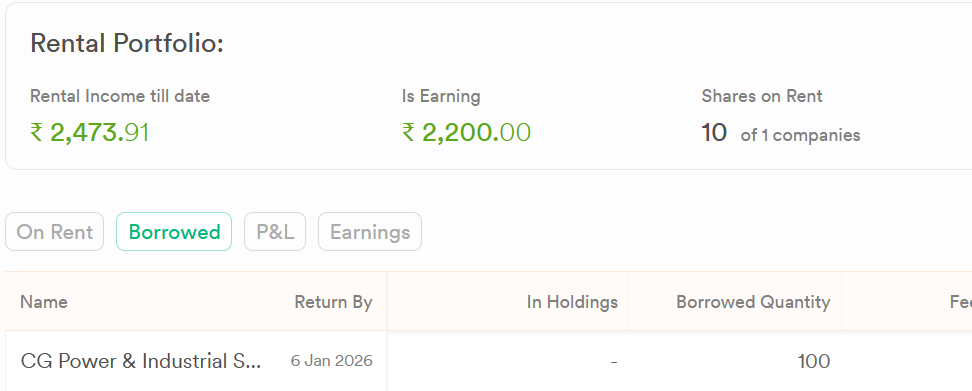
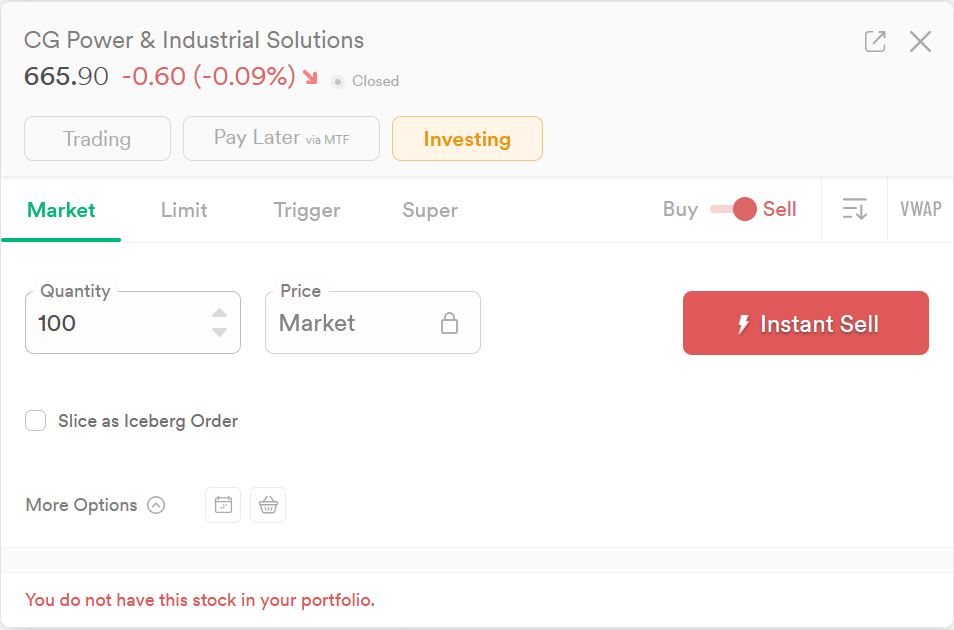
I see borrowing stocks using SLBM as a good option, as I can short sell the borrowed stocks I suppose. There is no leverage and lesser position sizes compared to stock futures. So, I placed a few borrow orders yesterday (thursday) and they are showing up in my account today (Friday). But how do I short sell the stocks. When I try to short sell the borrowed stocks, it shows the stocks are not in my portfolio and the orders get cancelled. As a retail trader, can I short sell the borrowed stocks. If not, what is the benefit of borrowing stocks as a retail trader. I understand renting out gives rental income for retail trader but how does borrowing the stock benefit a retail trader. And if I can short sell the stocks, please inform me how do I perform the same. Here are screenshots of the error appearing.
Traders borrow shares through securities lending to primarily implement specific trading strategies, generate profits from various market conditions, and manage risk and settlement obligations. This process is part of a formal mechanism, the Securities Lending and Borrowing (SLB) system.
The primary reasons traders borrow shares are:
Short Selling: The most common reason. If a trader believes a stock’s price will drop, they borrow shares, sell them at the current higher price, and aim to buy them back later at a lower price. They then return the shares to the lender, profiting from the price difference (minus the lending fee).
Arbitrage: Traders use borrowed shares to exploit temporary price discrepancies between different markets, such as the spot (cash) market and the futures or options markets. This allows them to capture a risk-less profit from the mispricing.
Meeting Delivery Obligations/Avoiding Settlement Failure: If a trader has sold shares they do not physically own (e.g., due to a failed internal process or a short position that needs to be covered), borrowing stocks through the SLB mechanism ensures they can fulfill their commitment by the settlement date and avoid potential penalties.
Hedging: Large financial institutions and traders may borrow securities to offset the risk of other positions in their portfolios or to manage their overall market exposure.
Market Making: Financial institutions acting as market makers may borrow shares to maintain continuous buy and sell prices (tighter bid-ask spreads) and ensure market liquidity for other participants.
In essence, borrowing shares provides traders with flexibility to act on a bearish market view or to execute complex, time-sensitive strategies that require access to specific securities they do not currently
Hi @zaman, when you borrow shares, the stocks are credited to your portfolio on T+1 by the end of the day. This means you cannot sell the borrowed shares on Friday if they were borrowed on Thursday, as they are not yet actually in your portfolio during Friday market hours. You will be able to sell them on Monday instead. if you face any difficulty on Monday then do let us know at Support
Hi @blazemarkets, here, futures liquidity was mentioned specifically in the context of bid–ask spreads. We didn’t fully understand the second part of your question, so please feel free to clarify it for us.
Regarding SLB, these contracts can have maturities of up to 12 months, unlike stock futures, which are standardised for 3 near month expiries.
Hi @SmallCapHunter, We do not charge any brokerage on SLBM rent and borrow transactions. You only need to activate the SLB segment with a one-time activation fee of ₹199, which will be debited from your Dhan ledger. After activation, you can start renting and borrowing shares.
This question just popped into my head, and I figured I should ask before I forget. Let’s say I have around 50 securities in my Demat account with Dhan, and since these are long-term holdings, I don’t really keep track of the individual companies, their quantities, or their current value. If I decide to rent out all of them through Dhan’s SLBM, I have a couple of concerns:
Is Dhan’s SLBM platform 100% reliable when it comes to record-keeping? Has it been stress-tested for all possible scenarios?
Or should I still keep manual records, like writing everything down on paper, to make sure nothing gets lost when securities are lent out and then returned?
I don’t think this assurance has been covered in any of your SLBM materials, so I wanted to check.
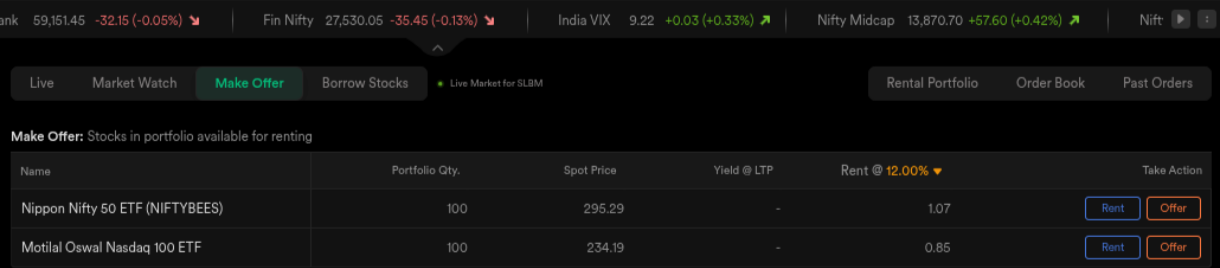
Hi @dazzler263, yes, our SLBM platform has been thoroughly tested before going live and includes built-in tracking to ensure transparency and reliability. You don’t need to maintain manual records. For SLBM, we provide a dedicated Rent Stocks section that includes a rental portfolio, past orders, and an order book so you can track what is lent and returned.
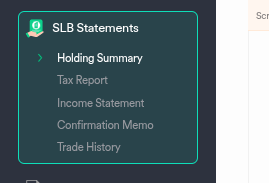
Additionally, for every SLBM transaction, a confirmation memo is sent to your registered email. You can also track all SLB trades and Income through the Dhan Journal, similar to equity reports. This ensures your holdings and transactions are properly recorded and easy to monitor end to end.