Hello Traders & Investors,
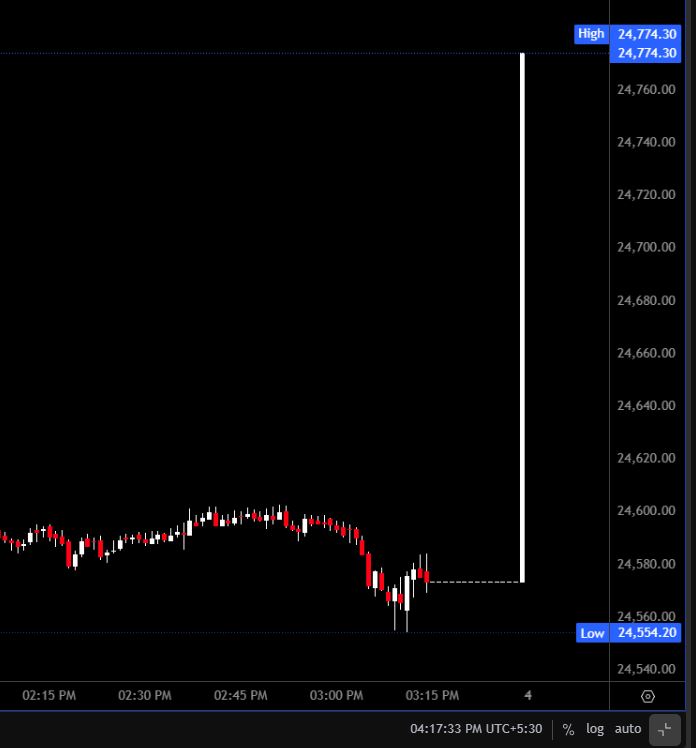
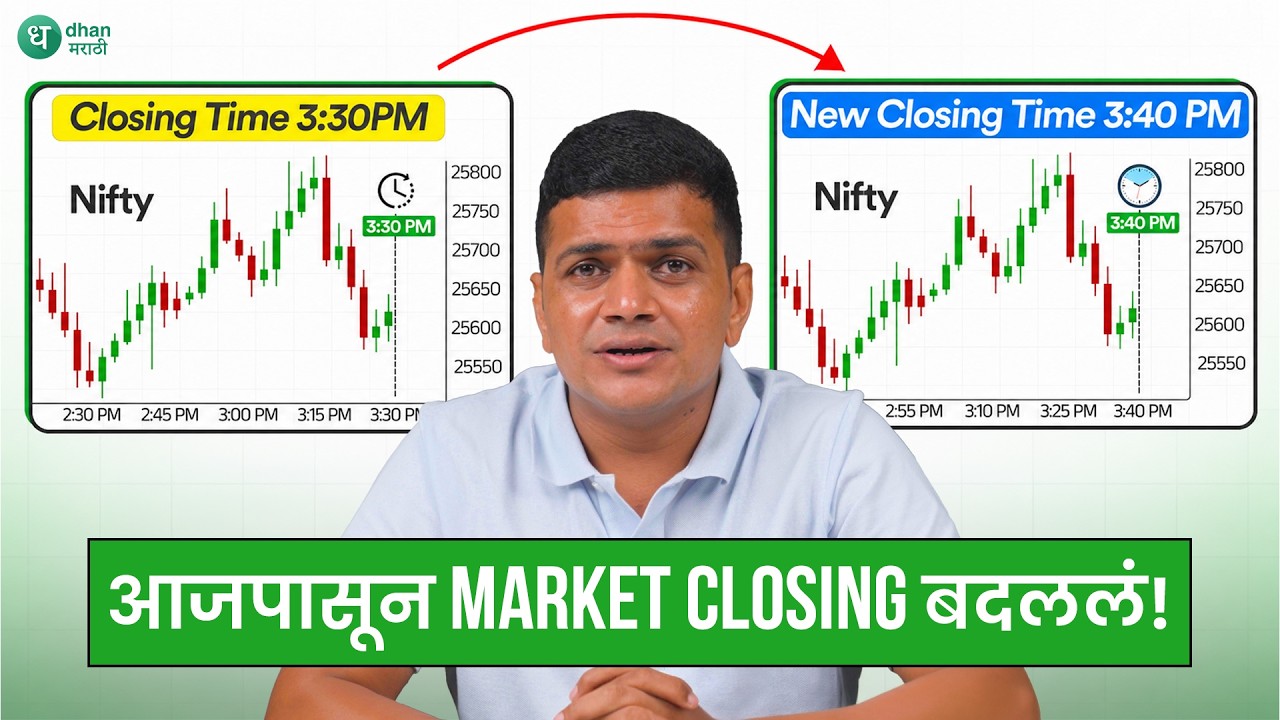
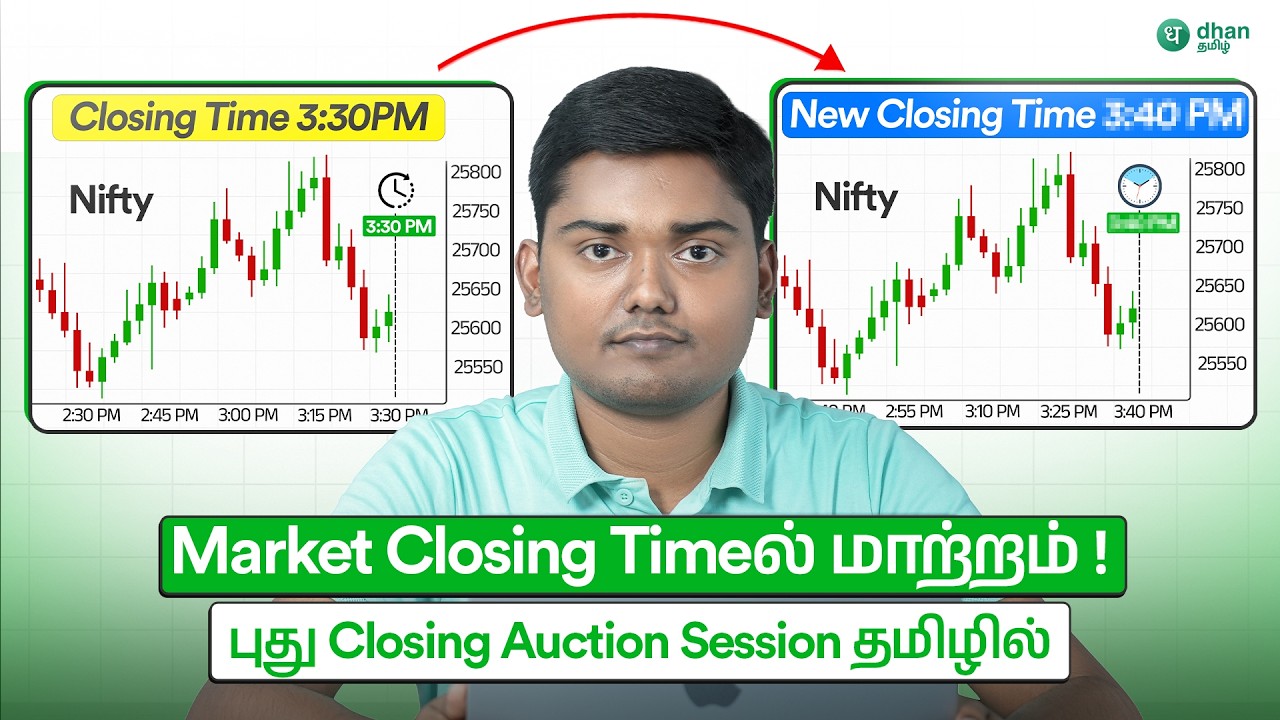
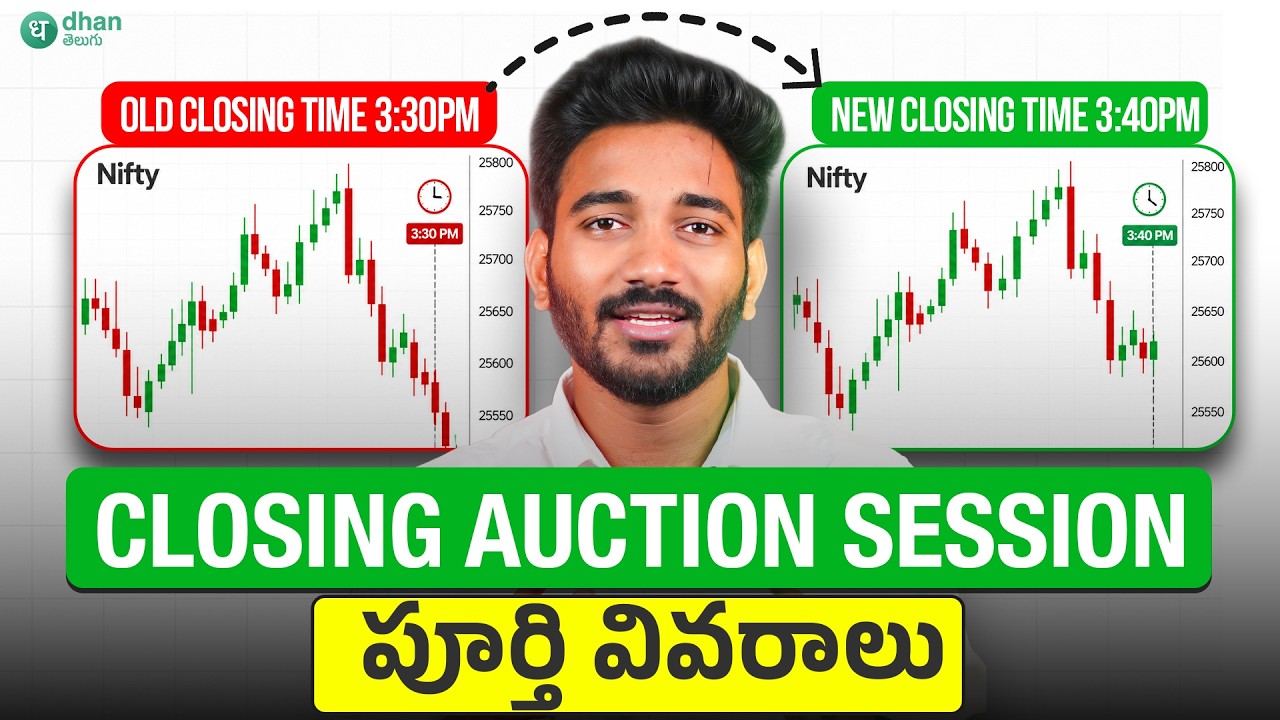
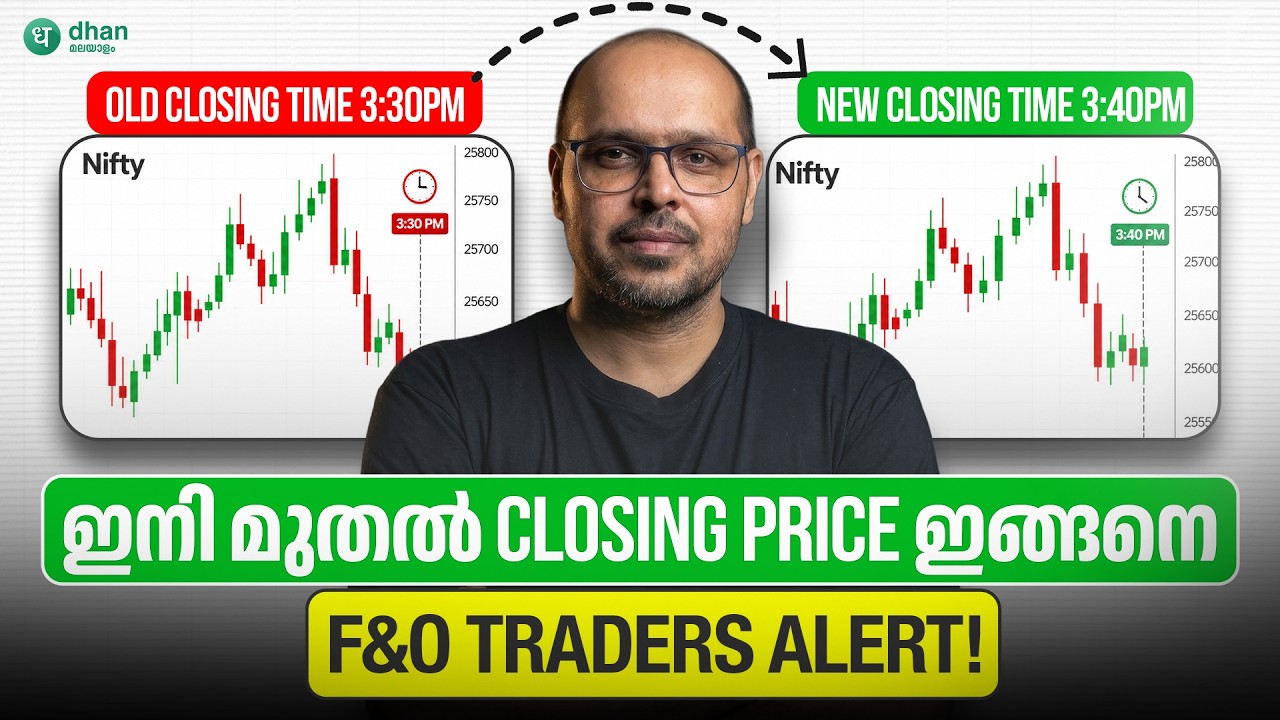
From 3 August 2026, some fundamental changes are happening to Indian Markets that every investor & trader needs to know, and also has to get used to.
The official closing price of F&O stocks will no longer be the volume weighted average price of the last 30 minutes of trades. Instead, it will be discovered through a dedicated Closing Auction Session (CAS). In short, a separate session is held between 3:15 PM and 3:35 PM, where all buy and sell interest pools together and match at a single equilibrium price. If you trade or invest in stocks where F&O contracts (or derivatives) are available, the way the market closes each day is about to change, and this post walks you through exactly what that means.
How is the closing price determined today?
Right now, the closing price of a stock is calculated as the Volume Weighted Average Price (VWAP) of all trades executed in the last 30 minutes (i.e. 3:00 PM to 3:30 PM). It is a backward-looking average of whatever happened to trade in that window.
That closing price is far more important than most retail traders realise. It is the reference used for:
- Derivatives settlement - Futures & Options settle against it
- Index computation - The official close of Nifty, Sensex and their constituents
- Mutual Fund NAVs - The value at which you buy and redeem fund units
- Passive Funds (index funds & ETFs) that need to transact at the closing price to track their benchmark accurately
Because so much money hinges on this single number, the market regulator SEBI has indicated that they want it to be discovered in the fairest and most transparent way possible. A VWAP average can be nudged by a handful of trades. This is why the new approach of CAS is being introduced.
How is the new Closing Auction Session (CAS) going to work?
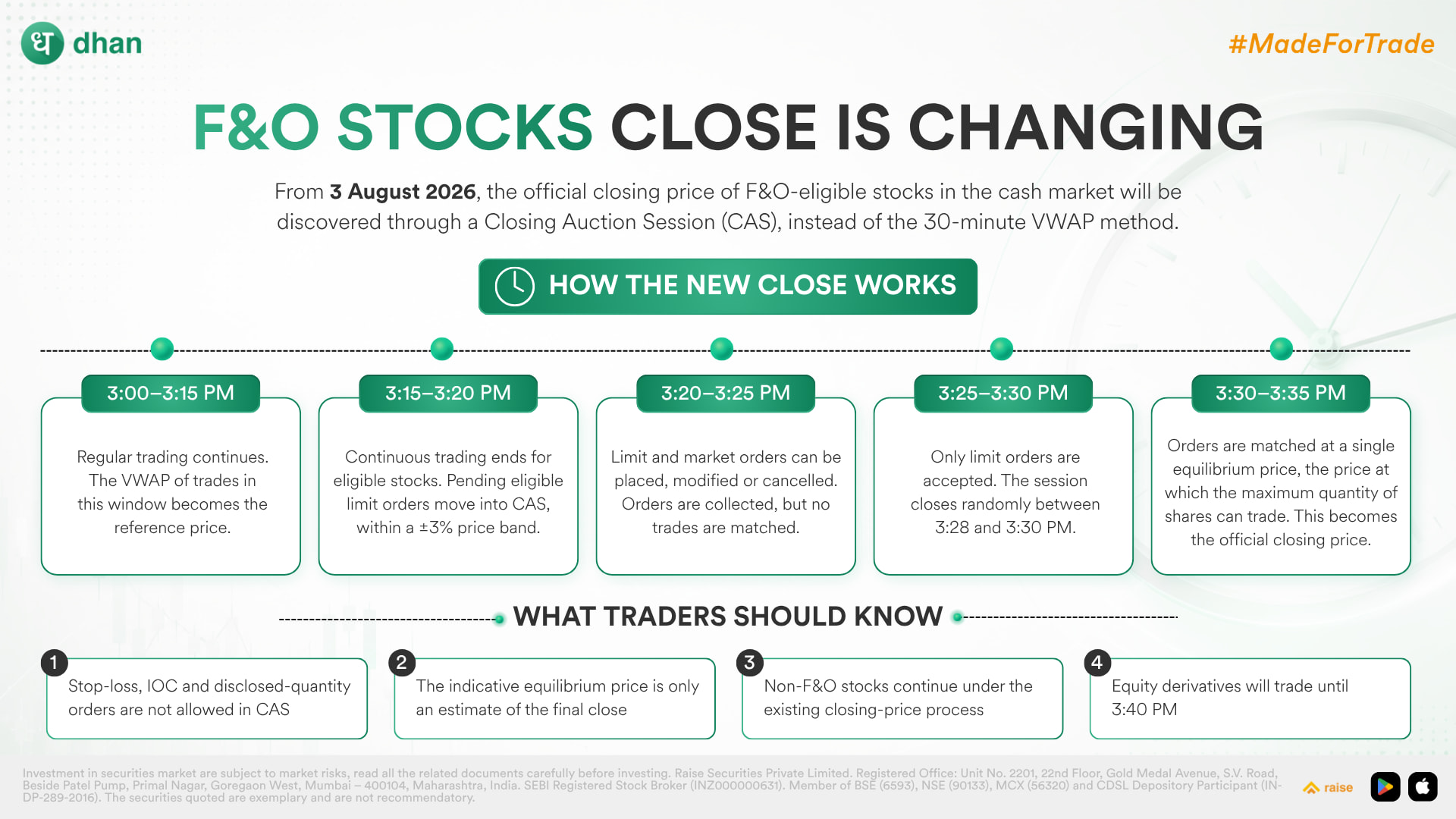
For a CAS-eligible instrument (for now, F&O stocks), the regular Continuous Trading Session (CTS) will now end at 3:15 PM, and the stock will move into CAS. Here is exactly what happens in each time window:
| Time | Phase | What’s happening |
|---|---|---|
| 3:15 - 3:20PM | Transition Phase | Continuous Trading Session (CTS) closes for CAS-eligible stocks. The exchange revises the price band to ±3% based on reference price, and carries eligible pending orders into the CAS. No new orders can be placed in this window. |
| 3:20 - 3:25 PM | Order Entry - Limit & Market orders | You can place, modify and cancel both Limit and Market orders. |
| 3:25 - 3:30 PM | Order Entry - Limit orders only (+ random close) | Only Limit orders can be entered, modified or cancelled. Market orders can no longer be modified or cancelled. Limit orders will be converted to Market Orders.The session closes randomly at some point between 3:28 and 3:30 PM, decided by the system, so nobody can game the exact last second. |
| 3:30 - 3:35 PM | Order matching & trade confirmation | All orders match at a single Equilibrium Price. Trades are confirmed. This Equilibrium Price is the Close Price. |
| 3:35 - 3:50 PM | Transition | The system moves from CAS to the post-close session. |
| 3:50 - 4:00 PM | Post-close session | Unchanged from today (except the timing), trades execute at the determined closing price. |
Let us now understand each time window one by one. Here is the complete breakdown of the process:
3:00 - 3:15 PM
This is a regular trading window, which we call the Continuous Trading Session (CTS). The Volume Weighted Average Price of all trades executed in these 15 minutes becomes the reference price for (Closing Auction Session) CAS.
3:15 - 3:20 PM
All eligible stocks transition from CTS to CAS. Normal trading is not allowed now. All orders outside the range of ±3% of the reference price are cancelled. All pending limit orders are moved to CAS. All pending Stop Loss orders and orders with disclosed quantity are cancelled.
3:20 - 3:25 PM
Order entry is now allowed. Both Limit orders and Market orders can be placed, modified and cancelled. This is only a bidding process; matching of trades does not happen here. From this time onwards, you will get an indicative equilibrium price (indicative close price). The CMP/LTP you see will be the Indicative Equilibrium Price (IEP).
3:25 - 3:30 PM
Order entry continues, but only Limit orders can be placed, modified and cancelled. Market orders are not allowed, and existing Market Orders can neither be modified nor cancelled. If you place a Market Order, it will be converted into a Limit Order at the Indicative Equilibrium Price (IEP). This session closes randomly between 3:28 and 3:30 PM.
3:30 - 3:35 PM
No more orders can be placed now. All orders start matching at the equilibrium price. This equilibrium price becomes the Close Price of the instrument.
3:35 - 3:50 PM
The Closing Auction Session (CAS) is over. The market is transitioning to the Post Close Session.
3:50 - 4:00 PM
The Post Close Session starts. This works exactly as it does currently. There is no change here, except the timings.
Two things worth noting:
- Non-F&O stocks are unaffected - Their Continuous Trading Session (CTS) runs till 3:30 PM as usual, and their close is still VWAP-based for the last 30 minutes.
- The equity derivatives segment now runs till 3:40 PM (extended from before) - For both index and stock derivatives, this keeps derivatives trading alive while the underlying cash auction completes.
How is the Closing Price actually discovered? What is the Equilibrium Price?
During the CAS, the exchange does not match orders one by one the way continuous trading does. Instead, it collects all eligible buy and sell orders and asks a single question: at what price can the largest quantity of shares change hands? That price becomes the equilibrium price, and it becomes the day’s closing price.
Importantly, everyone who trades in the CAS, trades at that same single price. Nobody gets a worse fill just because their order came later.
The exchange works through a clear set of tie-break rules to determine the Equilibrium Price, in this order:
- Maximum executable volume - The price at which the most shares can trade is the equilibrium price.
- If two or more prices allow the same maximum volume, then the price with the smallest order imbalance (the least unmatched quantity) is the equilibrium price.
- If it is still a tie, then the price closest to the reference price is the equilibrium price.
- If the reference price sits exactly midway between two candidate prices, the reference price itself becomes the equilibrium price.
- If no equilibrium price can be discovered at all, the reference price becomes the close.
So what is the reference price, and how is it calculated?
The reference price is the anchor for the whole Closing Auction Session. To begin with, it is the VWAP of the stock’s trades between 3:00 PM and 3:15 PM.
The exchange works through the following sequence to determine the reference price:
- Volume Weighted Average Price (VWAP) of trades from 3:00 - 3:15 PM.
- If there were no trades in the above window, then the stock’s LTP for the day is the reference price.
- If there was no trade at all during the day, then the prevailing theoretical price (based on the cash market LTP at 3:15 PM) of the stock’s future is taken as the reference price.
The reference price does two jobs: it sets the ±3% price band for the CAS, and it acts as the fallback closing price if the CAS cannot find an equilibrium price. Note that the reference price and the final closing price are not the same thing. The reference is the starting anchor; the equilibrium price is the discovered result.
What orders can and cannot be placed during CAS?
Order types allowed in CAS:
- Limit Orders : Both carried over from the Continuous Trading Session and freshly placed in CAS
- Market Orders : Only during the 3:20 - 3:25 PM time window. If market orders are placed in the 3:25 -3:30 time window, it will be converted to Limit Orders at Indicative Equilibrium Price.
Order types not allowed in CAS:
- Stop Loss orders : Both Stop Loss Limit and Stop Loss Market are not allowed
- Disclosed quantity orders - Traders must show the full quantity
- IOC orders - Since live matching does not happen, Immediate-or-Cancel (IOC) orders are not permitted
- Super Order matching will be stopped during the Closing Auction Session. No Target or Stop Loss attached to a Super Order will trigger during CAS.
How do orders get matched during CAS?
In CAS, order matching and trade execution start in the 3:30 - 3:35 PM time window. All trade execution happens at the equilibrium price. For matching, market orders are given priority over limit orders. The matching sequence runs as follows:
- Market orders match against market orders, in time priority, at the equilibrium price.
- Any leftover market orders match against limit orders, in price-time priority.
- Remaining limit orders match against limit orders, in price-time priority.
What actually changes in the F&O / Derivatives segment?
CAS is technically a cash segment mechanism, but it has knock-on effects for derivatives that F&O traders must know:
-
Extended hours: Equity derivatives (Index F&O and Stock F&O) now trade till 3:40 PM.
-
Stock futures price band reset: To keep futures aligned with the cash segment CAS, the price band for stock futures is reset to ±3% from 3:15 PM to 3:40 PM. Its reference price is computed separately, from the VWAP of the stock future’s own trades between 3:00 PM and 3:15 PM (with LTP / theoretical price fallbacks), so it can differ from the cash reference price.
-
Dynamic price band flexing paused: The usual dynamic flexing of stock futures price bands does not operate between 3:15 PM and 3:40 PM. As a result, the “last half hour of continuous trading” for flexing purposes is treated as 2:45 - 3:15 PM.
-
Options unchanged: There is no change to the options price band or the Limit Price Protection (LPP) methodology through the day, including during CAS.
-
Derivatives closing price: Futures and Options closing prices continue to follow the existing method, i.e. the VWAP of the last half hour, from 3:10 PM to 3:40 PM.
In the stock futures, outstanding orders priced outside the revised ±3% band are cancelled when the band is reset.
NEW: Intraday (MIS) auto Square-Off timings at Dhan
If you trade intraday (MIS) positions, do note an important change that comes with CAS. Dhan will auto square-off any open intraday positions that you have not already closed, as per the schedule below:
| Segment | New auto square-off time |
|---|---|
| All Equity (Cash) | 3:10 PM |
| Index Derivatives & Equity Derivatives | 3:25 PM |
The Closing Auction Session may look like a small change on paper, but it changes the last 45 minutes of your trading day in a very real way.
For most long-term investors, nothing much changes; you will simply see a closing price that is harder to influence and better reflects genuine demand and supply.
For active traders, the adjustments are practical ones: your intraday positions will be squared off at a different time, your stop loss orders will not carry into the auction, and the familiar 3:20 - 3:30 PM window will now behave like a bidding process rather than continuous trading.
Plan to close or roll your intraday positions before 3:10 PM in cash and 3:25 PM in derivatives, avoid depending on stop losses in the final stretch, and treat the Indicative Equilibrium Price as a guide rather than a guaranteed close.
Overall, this is a positive move for market quality. A single, transparent price where the maximum volume can trade is a much fairer way to close the day than an average that a few trades can tilt.
We have created a detailed video explaining how CAS works, watch it here 
Happy Trading!
Jay

 . E.g :- Today